Scratch vs. Python for Kids: How to Choose the Right Coding Path
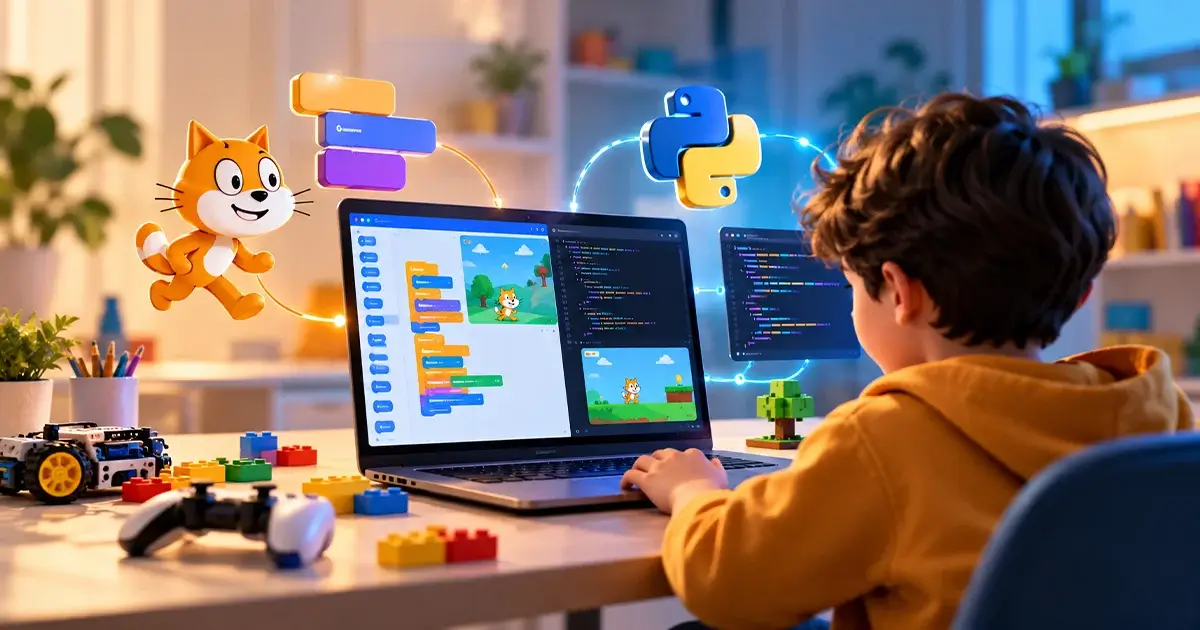
Table of Contents
Introducing children to programming builds logical thinking, structured problem-solving, and digital creativity. However, parents often face a common question when getting started: should kids begin with Scratch’s colorful drag-and-drop blocks or jump straight into writing real code with Python?
What Is Scratch and Who Is It Best For?
Developed by the MIT Media Lab, Scratch is a visual, block-based programming environment designed primarily for children ages 7 to 11. Instead of typing commands, kids snap together color-coded logic blocks to create interactive stories, animations, and 2D games.
- Zero Syntax Frustration: Children never get stuck on missing semicolons, indentation errors, or typing mistakes, allowing them to focus purely on computational thinking.
- Instant Visual Feedback: Kids immediately see characters move, play sounds, and react to keyboard inputs, keeping motivation and engagement high.
- Core Logic Foundations: Concepts like loops, conditionals (if/else), variables, and events are learned naturally through play.
What Is Python and When Should Kids Start?
Python is a real-world, text-based programming language used by professional software engineers, data scientists, and AI researchers. Because its syntax reads almost like plain English, it is widely recommended as the best first text-based language for learners ages 11 and older.
- Real-World Industry Relevance: Kids transition from toy projects to building genuine command-line games, web apps, automation scripts, and beginner artificial intelligence projects.
- Clean, Readable Structure: Python avoids heavy punctuation symbols, making it far easier for young minds to read and debug than languages like C++ or Java.
- Scalable Skill Growth: Skills learned in Python directly prepare teenagers for high school computer science courses, coding competitions, and future tech careers.
Scratch vs. Python: Key Differences at a Glance
- Age Group: Scratch is ideal for ages 7–11; Python fits best for ages 11+ (or younger kids with strong typing skills).
- Learning Style: Scratch uses visual blocks and multimedia storytelling; Python relies on typed instructions, text logic, and structured modules.
- Ceiling of Complexity: Scratch is tailored for educational projects and simple 2D games, while Python scales all the way to professional software development.
The Best Roadmap for Young Learners
You do not have to treat Scratch and Python as competing choices—they work best as sequential stages:
- Step 1 (Ages 7–10): Start with Scratch for 3 to 6 months to master loops, coordinates, variables, and game logic without typing barriers.
- Step 2 (Ages 11+): Transition to Python using visual libraries like Turtle graphics or Pygame Zero so kids can connect their Scratch intuition to real typed code.
Tags :
uiux
Product design
- Comments
- The latest posts